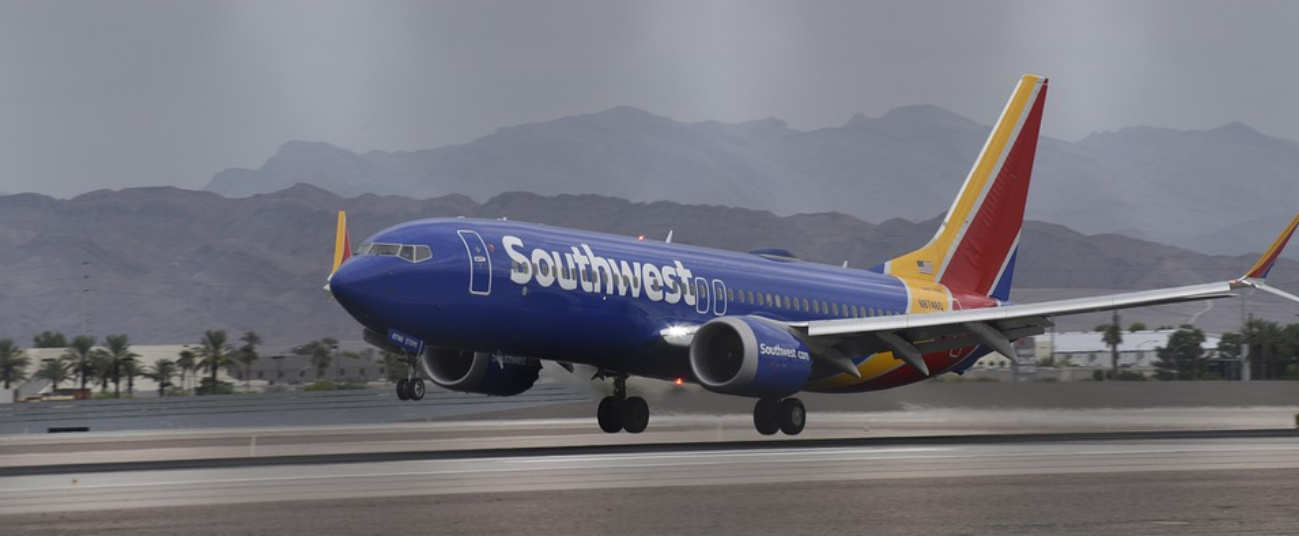
Southwest Airlines has dismantled virtually every element of the differentiation strategy that made it America's most consistently profitable carrier for nearly five decades — and did so at the urging of an activist hedge fund already heading for the exit. Elliott Investment Management's 18-month campaign forced assigned seating, checked bag fees, mass layoffs, and cabin segmentation onto a business model once studied in MBA programs as a textbook example of sustainable competitive advantage. The stock has doubled. The open question is whether shareholders just witnessed a turnaround or a value extraction.
Elliott arrived with a $1.9 billion thesis and a 51-slide playbook
In June 2024, Elliott disclosed an 11% economic stake — roughly $1.9 billion — in Southwest Airlines, accompanied by a presentation titled "Stronger Southwest" that accused management of "stunning underperformance" and a "stubborn unwillingness to evolve." The thesis was straightforward: Southwest's stock had fallen more than 50% from its early-2021 peak and traded below pre-pandemic levels while Delta and United surged to record profits on premium cabin revenue. Elliott demanded CEO Bob Jordan's removal, Executive Chairman Gary Kelly's departure, and a wholesale board overhaul.
What followed was a textbook activist escalation. Southwest adopted a poison pill in July 2024. Elliott nominated 10 directors for the 15-seat board in August. By October 24, the two sides settled without a shareholder vote: six new directors — five backed by Elliott — joined the board, Kelly accelerated his retirement, and Jordan kept his job on an explicit accountability framework. It was the largest board reconstitution Elliott had ever achieved in a U.S. campaign.
The changes came fast. Southwest announced assigned seating in July 2024, ending a 53-year open-boarding tradition. Red-eye flights launched in February 2025. In March 2025, the airline killed its iconic "Bags Fly Free" policy, imposing $35 and $45 fees matching legacy competitors. That same month came first-ever layoffs — 1,750 corporate positions, roughly 15% of headquarters staff — at a company that had never conducted involuntary reductions in its history. A new basic economy fare, dynamic loyalty pricing, and expiring flight credits followed. By January 2026, when assigned seating went fully live, Southwest had completed what CEO Jordan called "the most ambitious transformation in Company history."
Porter's differentiation strategy, undone in 18 months
Michael Porter's framework identifies three generic strategies: cost leadership, differentiation, and focus. Southwest occupied a rare position straddling cost leadership and differentiation simultaneously — low fares enabled by operational simplicity (single aircraft type, point-to-point routing, fast turnarounds) combined with distinctive service elements (free bags, open seating, no change fees, a famously engaged workforce) that created genuine customer loyalty and a 47-year streak of consecutive profitability before the pandemic.
Elliott's campaign systematically eliminated the differentiation half of this equation. The $7.27 billion that U.S. airlines collected in bag fees during 2024 proved too tempting; Southwest's own projections estimated $1 to $1.5 billion in annual bag fee revenue. Assigned seating unlocked premium cabin segmentation worth an estimated additional $1.5 billion annually. The financial logic was obvious. What it ignores is that Southwest's own internal analysis, presented at its September 2024 Investor Day, estimated bag fees could trigger $1.8 billion in market share losses from customer defection — a figure quietly buried beneath the revenue projections.
This is the classic innovator's dilemma applied to business model architecture. Southwest's differentiation was not decorative; it was structural. Free bags reduced overhead bin conflicts, speeding turnarounds. Open seating eliminated the complex seat-assignment infrastructure competitors maintained. The no-frills consistency attracted a loyal customer base that valued reliability over luxury. Stripping these elements does not simply add revenue lines — it fundamentally alters the cost structure, operational tempo, and brand identity that constituted the competitive moat.
The stock doubled, but who captured the value?
The market's initial verdict appears resounding. LUV traded at $27.74 at end of 2023, climbed to $33.50 by year-end 2024, and surged to roughly $54 by mid-February 2026 after management guided for at least $4.00 in 2026 EPS — a quadrupling from 2025's $0.93. The post-earnings jump of 17.3% was Southwest's largest single-day move since 1978.
Yet context matters. Over 2024, Delta rose approximately 50% and United soared 130%, dwarfing Southwest's 21% gain. Southwest's operating margin remains roughly 3%, compared with Delta's 10-12% and United's 8-9%. The stock's recent surge reflects forward guidance, not demonstrated results, and much of the per-share improvement comes from $2.6 billion in buybacks that retired 14% of shares outstanding rather than from organic earnings growth. Actual 2025 net income of $441 million was below 2024's $465 million.
Elliott's own behavior tells a revealing story. Having built its stake to a peak of approximately 16% by September 2025, the fund began selling in December 2025 as the stock crossed $40. By February 2026, its position had dropped to roughly 9% — below the threshold needed to call a special shareholders' meeting. Two Elliott-appointed directors resigned from the board that same month. The cooperation agreement was amended. The pattern is unmistakable: changes achieved, stock elevated, position reduced.
The "pump and dump" debate deserves nuance, not dismissal
Elliott's defenders point to Bebchuk, Brav, and Jiang's landmark 2015 study of 2,000 activist interventions, which found no evidence that activist exits were followed by abnormal negative returns. The academic consensus from this influential work holds that initial stock-price gains accurately reflect long-term value creation.
But more recent research complicates this picture. DesJardine and Durand, studying 1,324 activist targets against 7,670 control firms, found an initial 7.7% value uptick within twelve months followed by a 4.9% decline over four years, accompanied by average workforce reductions of 7%, R&D cuts of 9%, and social responsibility declines of 25%. Cremers, Giambona, Sepe, and Wang (2020) found that properly matched control firms actually outperformed activist targets over longer horizons — suggesting activism may decrease relative value even when absolute stock prices rise.
Elliott's own track record reflects this ambiguity. Its campaign at AT&T lasted roughly one year before full liquidation; Salesforce saw Elliott withdraw within three months of disclosure; Twitter was held for two years until Elon Musk's acquisition rendered long-term assessment moot. The median activist hedge fund holding period of 18 months to three years is fundamentally misaligned with the time horizons required to assess whether a business model transformation succeeds or destroys franchise value.
Carl Icahn's devastating 1985-1993 campaign at TWA — where systematic asset stripping yielded $469 million in personal profit while saddling the airline with $540 million in debt, ultimately leading to its extinction — represents the extreme cautionary case. Elliott's approach at Southwest is far less predatory. But the structural question remains identical: does the activist's investment horizon match the time required for the prescribed changes to prove durable?
Southwest now faces the worst strategic position in its history
The risk is not that Southwest's new revenue initiatives fail to generate income — they almost certainly will. The risk is competitive convergence. Southwest now charges the same bag fees, offers the same cabin segmentation, and operates the same basic economy fares as Delta, United, and American — but without international networks, airport lounges, premium long-haul cabins, or the loyalty ecosystems that make those carriers' strategies profitable. As aviation analyst Gary Leff observed, Southwest has adopted "a strategy of discarding everything unique about their business model and copying financial laggards."
The post-COVID airline industry has bifurcated sharply. Delta's premium cabin revenue overtook main cabin revenue for the first time in Q4 2025, reaching $5.7 billion in a single quarter. United is deploying widebodies with 50% premium configurations. Spirit Airlines filed for bankruptcy twice in ten months. The middle ground — where Southwest historically thrived — is collapsing. LCC domestic unit costs now sit just 5% below full-service carriers, down from a 12% gap in 2022, eliminating the structural cost advantage that low-cost models depended upon.
Southwest retains genuine assets: the largest point-to-point domestic network in the United States, an investment-grade balance sheet, strong brand recognition, and a workforce whose culture — though strained by unprecedented layoffs — remains an operational advantage. The airline's 2026 guidance of $4+ EPS, if achieved, would validate the transformation thesis and silence skeptics. Management projects $4.3 billion in cumulative incremental EBIT by 2026 from its initiative portfolio.
The real lesson is about governance, not greed
The most productive framing is neither celebration nor condemnation of Elliott, but a recognition of agency theory's core insight: Southwest's board failed its monitoring function long before Elliott arrived. The December 2022 holiday meltdown — caused by crew-scheduling software the airline had been warned about since 2018 — stranded two million passengers and cost over $800 million. The board responded by nearly doubling executive compensation. No senior leaders were terminated. The board lacked a single independent director with airline experience.
Elliott did not create Southwest's problems. But the solutions it imposed — optimized for the 18-month activist investment cycle — may prove insufficient for the decade-long competitive repositioning the airline actually requires. Herb Kelleher's famous dictum that employees come first, customers second, and shareholders third produced 47 years of profitability. The inversion of that hierarchy is now Southwest's defining experiment. Whether it succeeds will determine not just one airline's fate, but how corporate America weighs the competing claims of short-term financial optimization against the slow, difficult work of building durable competitive advantage.